The Area
Korakas · Rodakino · the south coast
Where you are
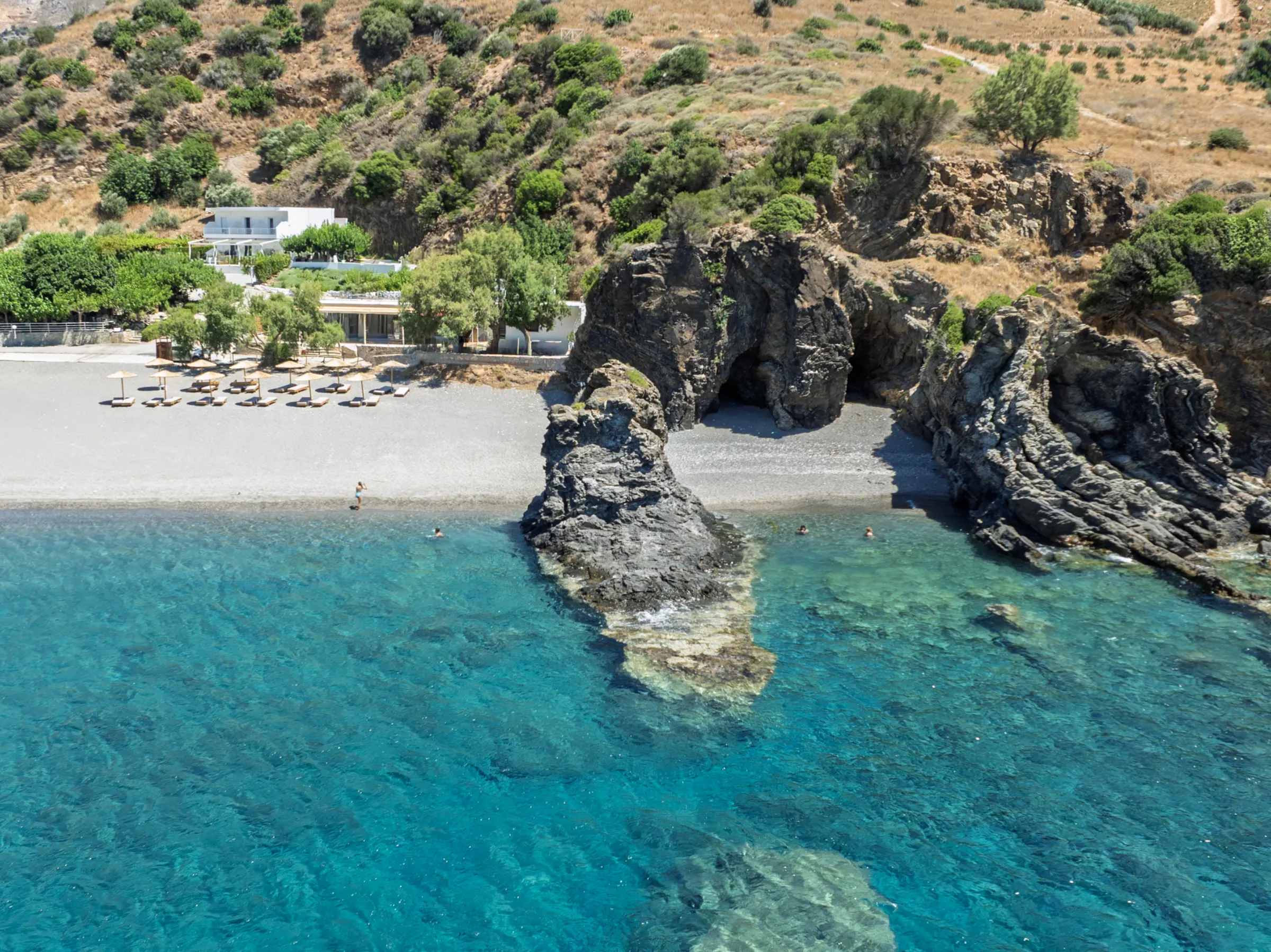
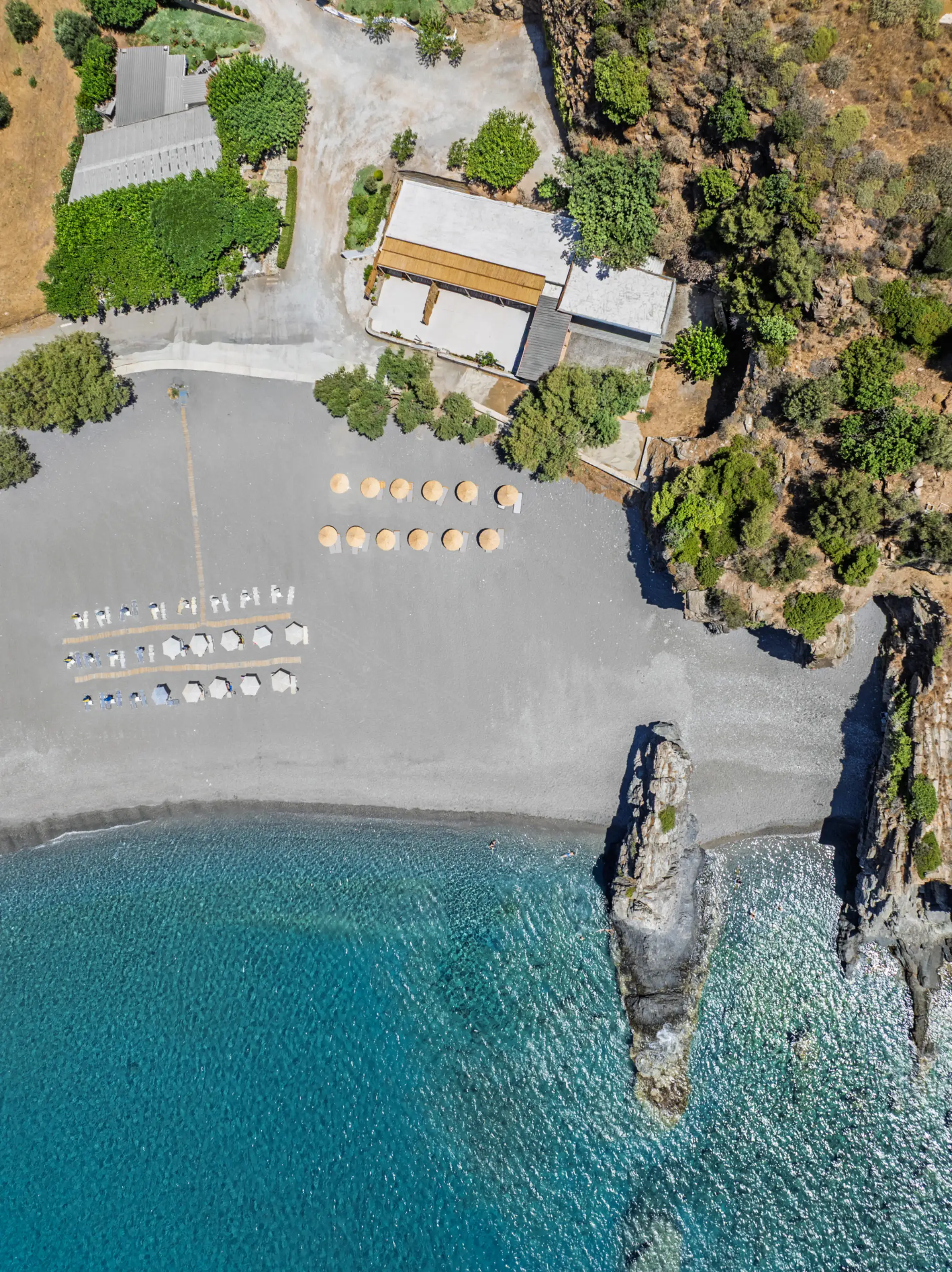
Korakas is a pebble beach below the village of Rodakino, on the south coast between Plakias and Frangokastello. The water is deep and clear, the cliff at the east end is full of caves, and there are no resorts anywhere near it.
Rodakino
The village above
13 km
Frangokastello fortress
40 km
Rethymno old town
The caves
A short swim from the beach
The three caves the house is named after are in the cliff at the east end of the beach. The water on the way out is shallow and clear, and the tall sea stack just offshore marks the spot.
The coast
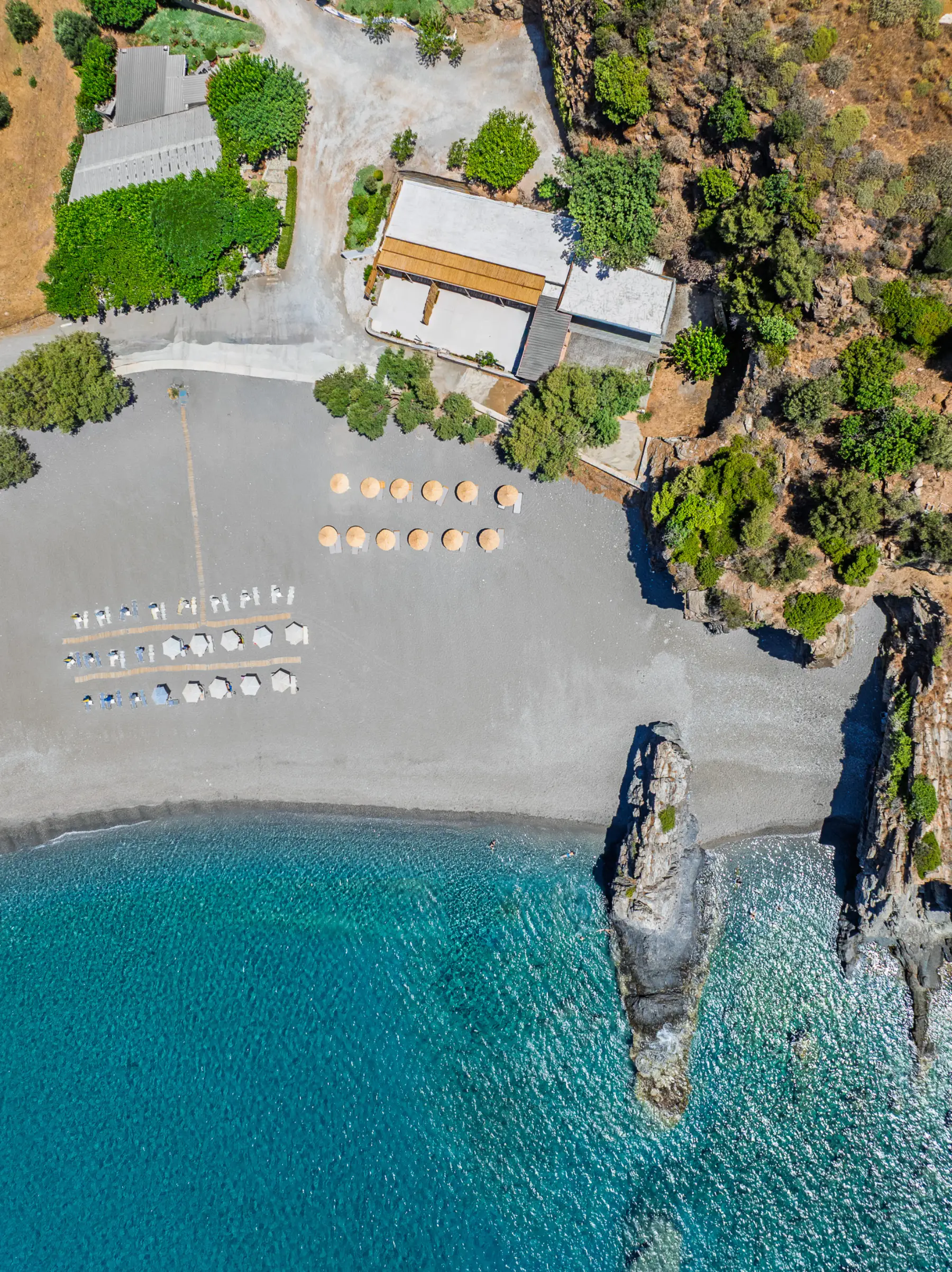
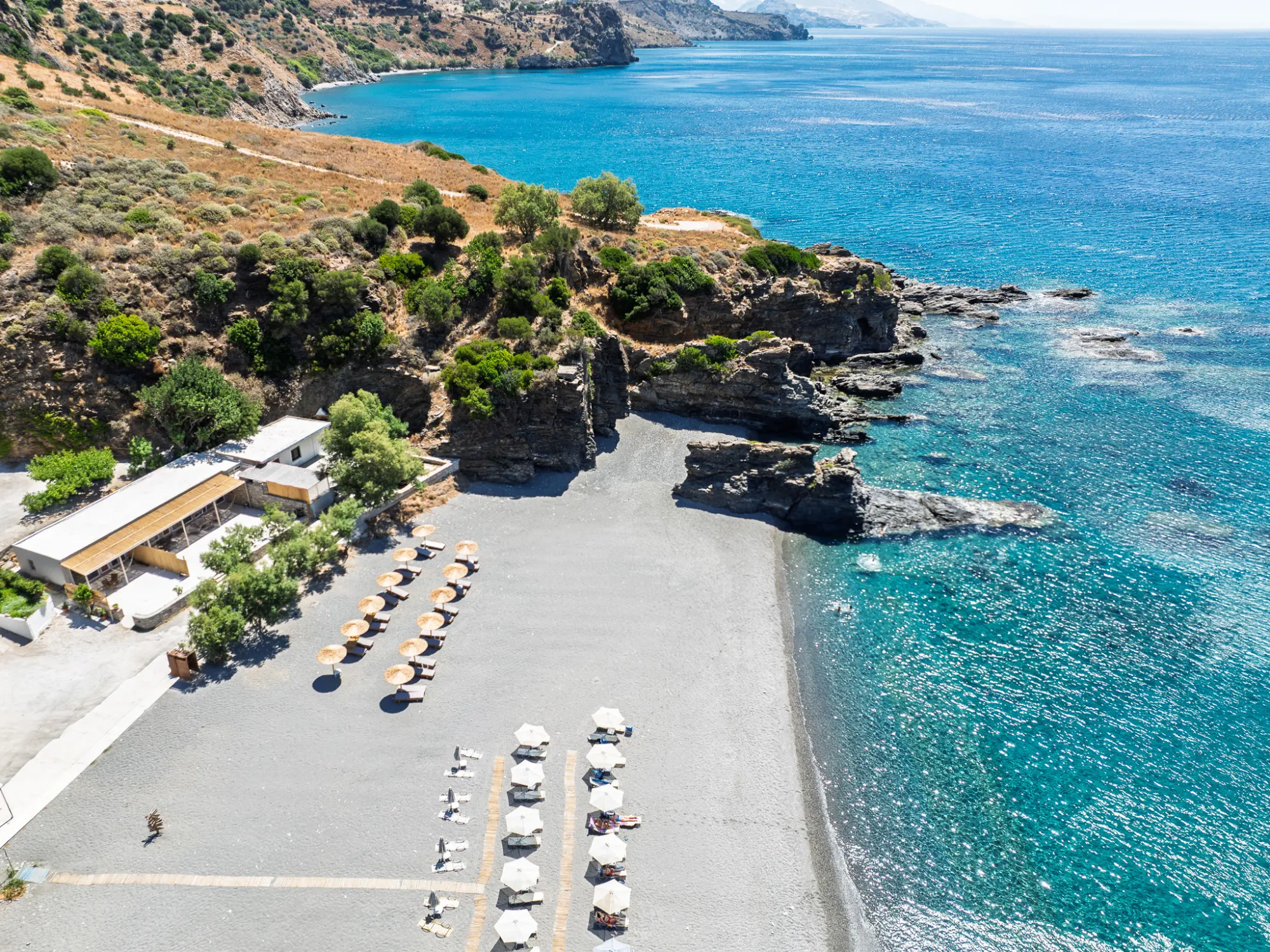
Headlands, coves, and a road that ends at the water.
Beyond the beach
Gorges, a fortress, and tavernas
Olive groves climb from the beach into the hills. Inland, the Kotsifou gorge road cuts through the cliffs. West, the Venetian fortress at Frangokastello is 13 km away; east, the coast road runs to Plakias.
Rodakino, the village above the beach, has tavernas for the evening.
The village
Rodakino means peach
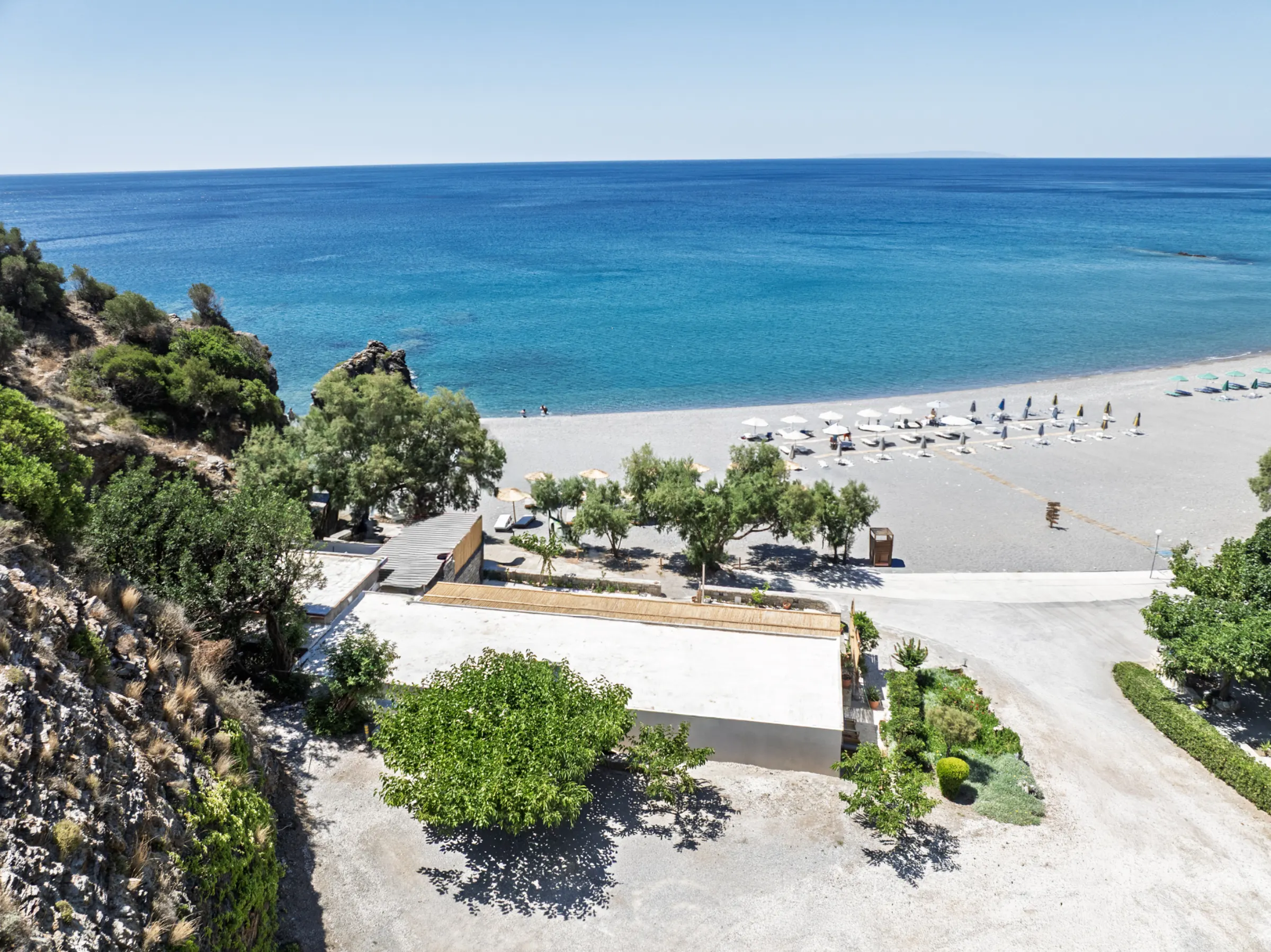
The village sits above the beach in two parts — Ano and Kato Rodakino, upper and lower, split by the gorge that comes down to the sea. The lower village is a couple of kilometres up the road, and it has what a week needs: a supermarket for supplies, a bakery run of a morning, and tavernas for the evening. There are more tavernas on the beach itself, and Polirizos, the next beach west, is sandier and shallower if you have small children.
The table
What you eat here
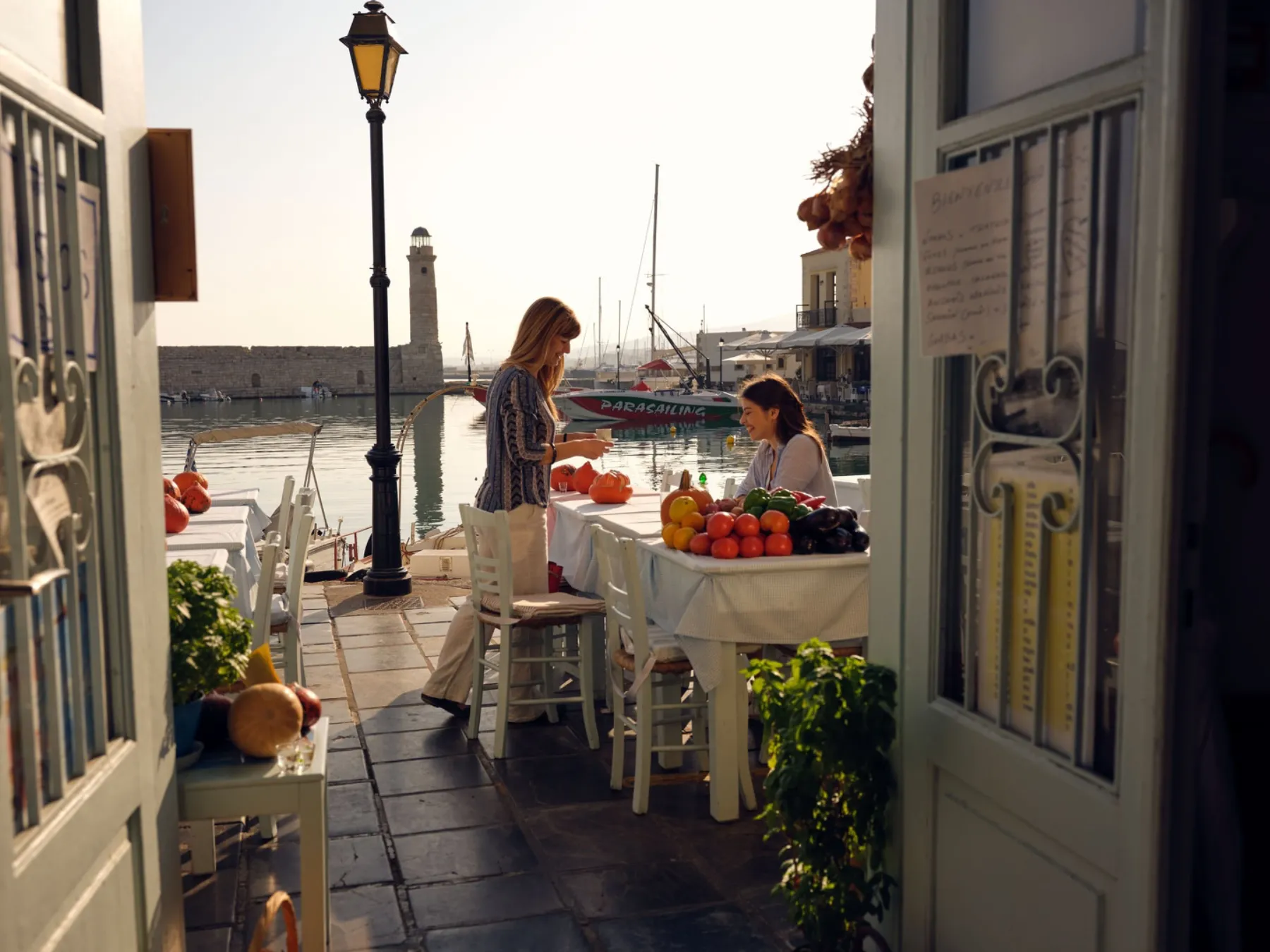
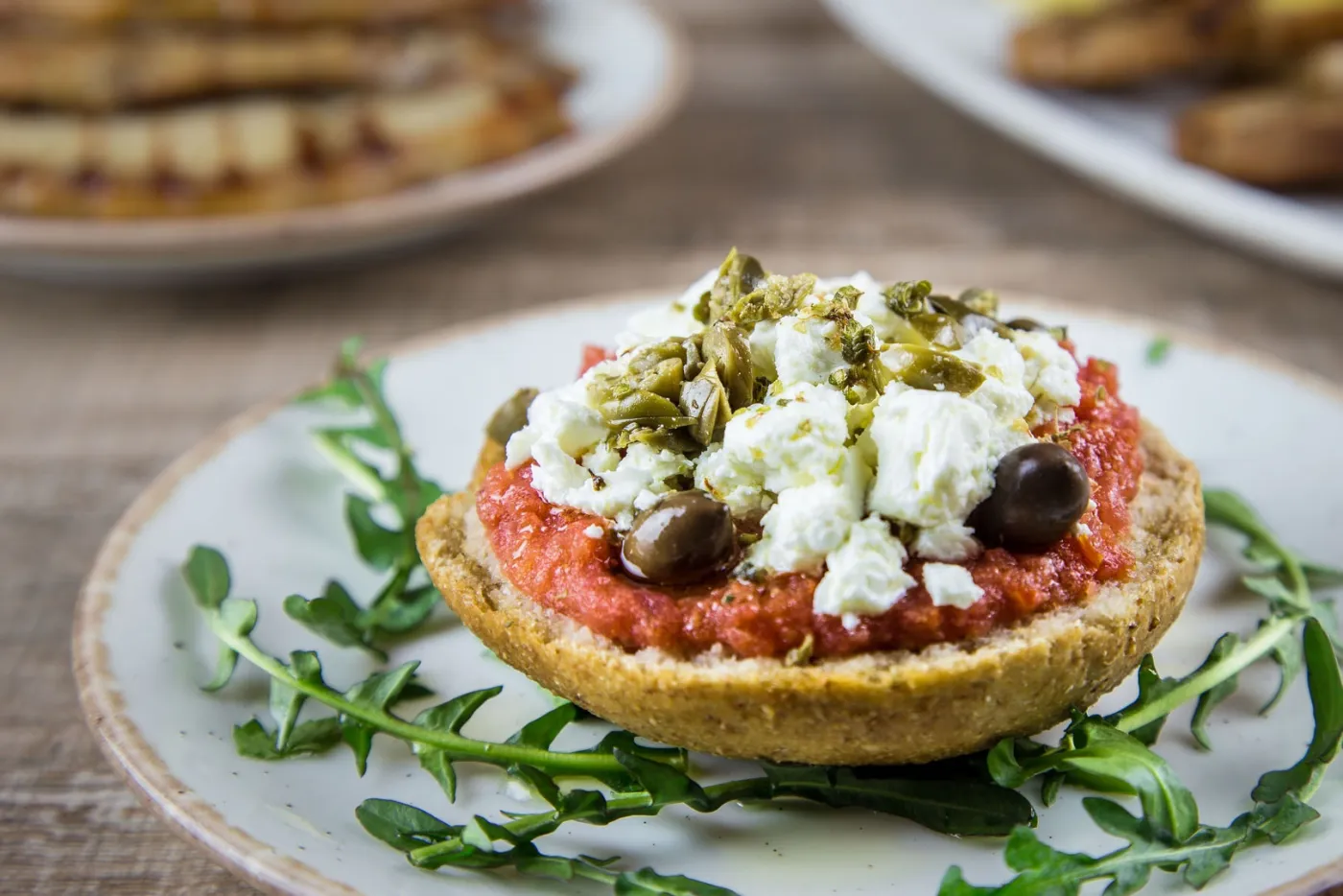
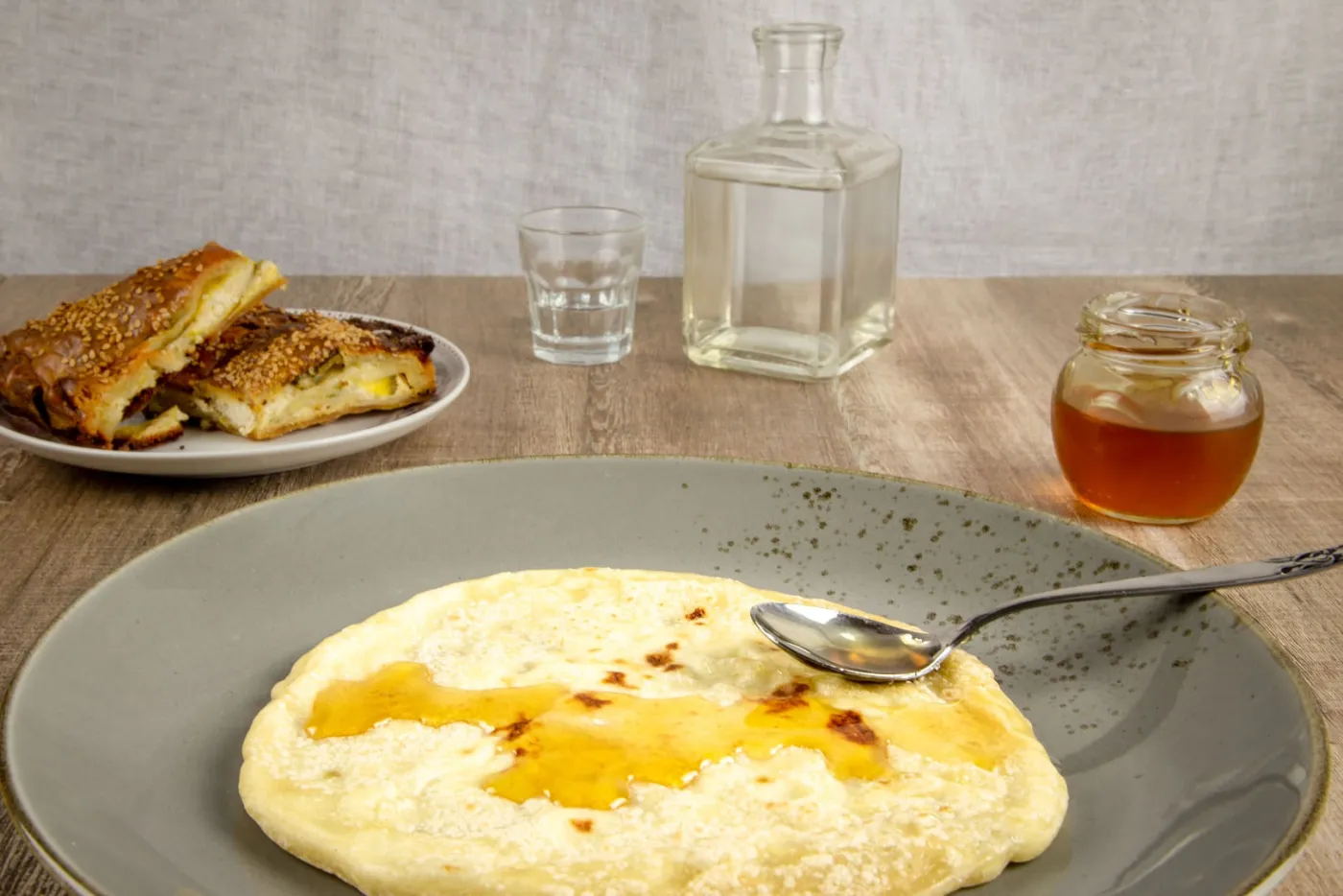
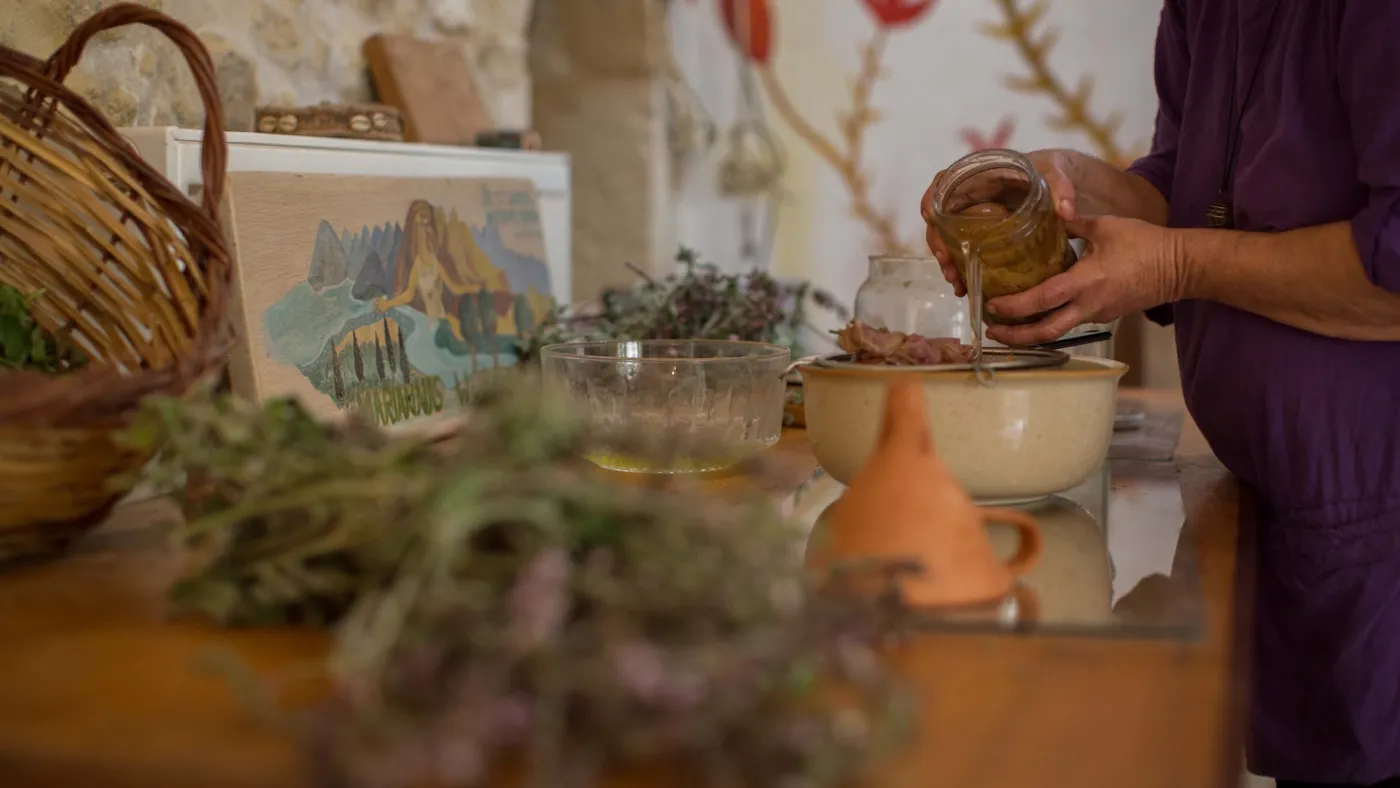
The food is Cretan and it is close by — dakos on barley rusk with tomato and mizithra, Sfakian pie with honey from the villages just west, mountain tea and herbs from the hills behind the beach, and a small glass of raki to end the meal. The tavernas in Rodakino and on the beach cook it; the supermarket keeps the rest.
When to come
The season, plainly
July and August
Hottest, busiest, and the beach umbrellas are full. Book early; minimum stays are longest.
May, June, September
Warm and much quieter. The sea is swimmable from late May.
October
Quiet and still warm — the sea holds around 23–24°C, and the beach empties out. Our own favourite month.
Winter
We stay open all year. Rates drop well below summer and the coast belongs to the villages again.
Getting here
The drive south
From Plakias
About 20 minutes west along the coast road.
From Rethymno
About 40 km over the mountains — roughly an hour.
From Chania airport
Around 1¾ hours; airport shuttle available on request.
Parking
Free private parking at the house — the road ends in the gravel yard behind it.
The beach
Dark pebbles, not sand — water shoes make getting in easier.
Supplies
Supermarket and bakery in Rodakino village, about 2 km up the road.
Frangokastello
The Venetian fortress, about 20 minutes west along the coast.
A good base for the south coast
Most of it is within an hour’s drive, and the beach is at the door.
Check availability